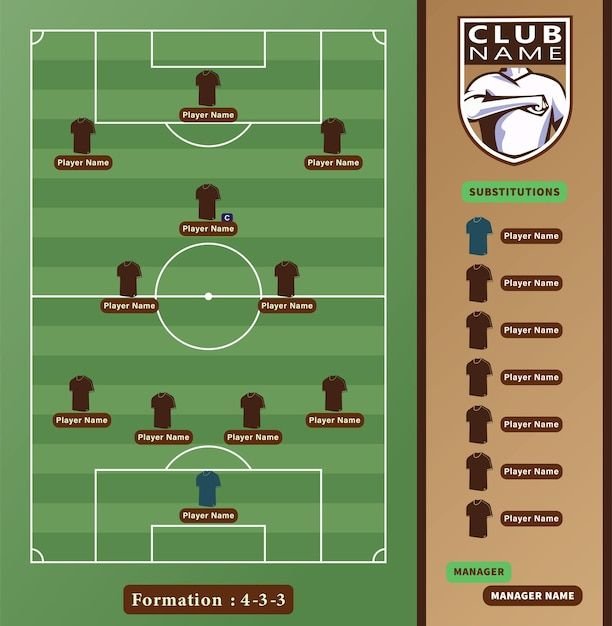
Football isn't just a game of skill and passion; it's a strategic battlefield where every decision can swing the pendulum from glory to defeat. Few choices loom larger for a coach than the starting eleven, and understanding the 'Impacto de las Alineaciones en el Resultado' – the impact of lineups on game results – is crucial for anyone who wants to truly comprehend the beautiful game. This isn't just about picking the best players; it's about a complex interplay of individual strengths, team dynamics, tactical formations, and the opponent's strategy, all culminating in that final score.
At a Glance: Why Lineups Matter So Much
- More Than Names: A lineup isn't just who plays; it's the formation, roles, and tactical instructions that define a team's approach.
- Data-Driven Insights: Advanced analytics, like Double Machine Learning, can quantify how different lineups affect victory probabilities and key game metrics.
- Player Profiles are Key: Individual player characteristics (speed, height, technical skill) significantly influence a lineup's effectiveness.
- Opponent Is Half the Equation: The opposing team's lineup and strategy are critical in determining your own optimal selection.
- Beyond the Obvious: Factors like injuries, player form, squad depth, and even psychological elements play a massive role in lineup decisions.
- Constant Evolution: Coaching staff increasingly rely on data science and nuanced analysis to make these high-stakes choices.
Beyond the Starting XI: What Lineups Truly Entail
When we talk about a "lineup," most fans immediately picture the 11 names on the team sheet. But in the nuanced world of professional football, a lineup is far more than just a list. It encompasses:
- The Formation: Is it a defensive 4-4-2, an attacking 4-3-3, a possession-based 3-5-2, or something else entirely? The formation dictates spatial relationships and overall team shape.
- Player Roles: A player's position is one thing, but their specific role within that position (e.g., a "holding" midfielder versus a "box-to-box" midfielder, a "target man" striker versus a "false nine") dramatically alters team dynamics.
- Tactical Instructions: Are the fullbacks expected to bomb forward, or stay back? Is the team pressing high, or sitting deep? These instructions are inextricably linked to the chosen personnel and formation.
- Substitutes: The bench is an extension of the lineup, offering tactical flexibility and the ability to respond to in-game developments, fatigue, or injuries.
A coach's lineup choice is essentially their opening strategic gambit. It signals their intent, their strengths, and how they plan to exploit the opponent's weaknesses while safeguarding their own vulnerabilities.
The Deep Science: Unpacking Lineup Influence with Data
For decades, lineup decisions were largely a blend of intuition, experience, and gut feeling. Coaches relied on their knowledge of players, their understanding of the game, and perhaps a bit of superstition. Today, however, data science is transforming this process, offering empirical insights into the 'Impacto de las Alineaciones en el Resultado'.
Recent research, for instance, has utilized sophisticated techniques like Double Machine Learning (DML) to rigorously evaluate how different lineups influence elite football matches. This isn't just about simple correlations; DML allows researchers to untangle complex relationships, isolating the true impact of a lineup choice by "eliminating confounding variables." Think of it as peeling back layers of an onion: instead of just seeing that Team A won with Lineup X, DML helps understand why Lineup X was effective, ruling out other factors that might have also contributed, like playing at home or against a weaker opponent.
This kind of analysis, applied to data from major European leagues over recent years, reveals fascinating truths. It moves us beyond subjective opinion to a data-backed understanding of which combinations of players and formations are statistically more likely to lead to success.
Micro-Example: The DML Lens on Formations
Imagine two teams, both strong, facing off. One opts for a 4-4-2, emphasizing defensive solidity and wide play. The other goes for a 4-3-3, aiming for control in midfield and dynamic attacking trios. Through DML, researchers can analyze thousands of similar matchups, controlling for factors like team strength, venue, and even recent form. The outcome isn't just "which formation wins more," but rather "what specific attributes of the 4-4-2, given the opposing 4-3-3, statistically lead to higher shots on goal or fewer cards conceded, and ultimately, a higher probability of victory?" It quantifies the strategic advantage.
Quantifying Victory: Probabilities Shaped by Your Choices
One of the most powerful contributions of this data-driven approach is its ability to quantify the probability of victory or defeat based on lineups. It's not just a qualitative assessment anymore; it's a measurable outcome.
The research quantifies this probability for both a team's own chosen lineup and, crucially, in relation to the opposing team's lineup. This makes lineup selection akin to a high-stakes chess match played before a single ball is kicked. Every player chosen, every positional tweak, every formation shift carries a statistical weight regarding the team's chances.
For example, if your team fields a highly attacking lineup against an opponent known for their defensive prowess, the DML model can estimate the shift in victory probability compared to a more balanced approach. It essentially provides a predictive score for each potential lineup combination, offering coaches a powerful tool to complement their experience. This also explains why coaches spend countless hours scouting opponents; they're not just looking for key players, but anticipating the entire structure and how their own team will counteract it. You can see this intricate dance of anticipation and counter-anticipation in matches like Inter Milan vs AC Milan lineups, where both legendary coaches often field surprising teams to gain an edge.
The Player Profile Puzzle: More Than Just Names on a Sheet
While formations and overall team strategy are critical, the individual characteristics of the players selected are paramount. It's not enough to simply have "good" players; you need the right players for the right system against the right opponent.
Modern analytics deeply scrutinize player characteristics, moving beyond generic skill ratings. The research highlights how specific attributes like:
- Height: Crucial for aerial duels, set-piece defense, and attacking headers. A team with taller defenders might be statistically favored against an opponent strong from corners.
- Speed: Essential for transitions, pressing, chasing down through balls, and covering defensive spaces. A speedy winger can exploit a slow full-back, statistically increasing chances of creating scoring opportunities.
- Technical Level: Encompasses aspects like passing accuracy, dribbling ability, first touch, and shot precision. A technically gifted midfield can dominate possession and unlock defenses.
These individual player characteristics aren't just qualitative observations; they are measurable data points that feed into the DML models. By analyzing how different combinations of these attributes perform in various contexts, it becomes possible to predict which optimal lineups will maximize a team's chances of success. A coach might, for instance, field a more physically imposing lineup for a gritty away game against a direct opponent, prioritizing height and strength over pure technical flair. Conversely, a home game against a team that sits deep might call for highly technical, agile players capable of intricate passing and creative movement.
The Opponent Factor: Responding to Their Hand
No lineup decision exists in a vacuum. A coach's choices are always a response to (or an attempt to preempt) the opponent's strategy. This cat-and-mouse game is fundamental to football tactics.
- Counteracting Strengths: If the opponent has a prolific striker, a coach might deploy an extra defensive midfielder or switch to a three-center-back formation. If their wingers are rapid, fullbacks might be instructed to stay deeper.
- Exploiting Weaknesses: Does the opposing team struggle with aerial balls? Bring in a tall target man. Are their fullbacks prone to getting caught high up the pitch? Unleash speedy wingers for counter-attacks. Is their midfield slow? Inject a dynamic, high-energy player to press and disrupt.
- Formation Match-ups: Sometimes, a coach will mirror the opponent's formation to negate their tactical advantages. Other times, they will deliberately choose a contrasting formation to create numerical overloads in key areas.
The ability to predict the opponent's lineup, or at least their likely tactical approach, becomes a significant strategic advantage. Scout reports, video analysis, and even past head-to-head records all feed into this complex decision-making process.
Crafting the Winning XI: A Coach's Decision Matrix
Beyond the scientific models and data analysis, the human element in lineup selection remains vital. Coaches must synthesize a vast array of factors, balancing logic with instinct.
Form vs. Fitness vs. Tactics
This is the eternal triangle for coaches.
- Form: Is a player currently performing at their peak? Are they scoring goals, making key passes, or consistently delivering solid defensive performances?
- Fitness: Is a player physically ready for 90 minutes (or more)? Are they carrying a knock? Do they need rest after a grueling schedule? Risking an unfit player can lead to early substitutions or further injury.
- Tactics: Does the player's skillset align with the specific game plan for this particular match? A player in great form might not be the right tactical fit for a particular opponent.
Often, a coach must compromise, perhaps selecting a player slightly out of form but tactically perfect, or resting a star player to ensure their fitness for a more crucial upcoming fixture.
Injury Impact & Squad Depth
Injuries are football's inevitable villains, forcing coaches to adapt on the fly. A key injury can unravel weeks of planning. This is where squad depth becomes paramount. Teams with strong benches and versatile players who can fill multiple roles are far more resilient. A robust squad allows a coach to maintain performance levels even when star players are sidelined, minimizing the 'Impacto de las Alineaciones en el Resultado' of unforeseen circumstances.
Match Context: Every Game Is Different
The importance of a match profoundly impacts lineup choices:
- League Match: Mid-table clash vs. title decider vs. relegation battle – each demands a different approach.
- Cup Game: Does a domestic cup game warrant resting key players for a more important league fixture, or is it a trophy to be pursued with full force?
- Home vs. Away: Playing at home often encourages more attacking, front-foot lineups, buoyed by crowd support. Away games might necessitate a more cautious, counter-attacking setup.
- First Leg vs. Second Leg (Two-Legged Ties): The aggregate score dynamic in cup competitions completely shifts how coaches approach both legs, often dictating conservative lineups in the first leg away from home.
Psychological Considerations
Footballers are human. Their mental state, confidence, and relationships within the squad can influence performance.
- Boosting Confidence: Playing a player who's been struggling might be a gamble, but a goal or a strong performance can reignite their form.
- Team Morale: Leaving out a popular captain or a fan favorite can sometimes have a ripple effect on team morale, even if tactically justified.
- Rivalries: In derby matches, the psychological intensity is immense. Coaches might opt for players known for their composure or their ability to thrive under pressure.
Common Lineup Blunders That Cost Games
Even the best coaches make mistakes. Here are some common pitfalls that can severely impact a team's chances:
- Ignoring Opponent Strengths: Underestimating the opponent or failing to adapt to their key players is a recipe for disaster.
- Rigid Adherence to a System: Sticking stubbornly to a preferred formation or style even when it's clearly not working against a specific opponent can be fatal. Flexibility is key.
- Misjudging Player Form/Fitness: Playing an out-of-form player hoping they'll "find" their game, or pushing an unfit player too early, often backfires.
- Overthinking/Underthinking: The balance between tactical genius and keeping things simple is delicate. Overcomplicating a lineup can confuse players, while underthinking can leave a team vulnerable.
- Failure to Use Squad Depth: Not rotating players in less crucial games, leading to burnout and injuries for key personnel.
- Playing Players Out of Position: While versatility is good, forcing a player into an unnatural role without sufficient preparation can diminish their effectiveness and create weaknesses.
Analyzing Lineup Impact Like a Pro
For fans and aspiring analysts, understanding lineup impact goes beyond simply reacting to the team sheet. It involves a deeper, more analytical look at the strategic choices.
Pre-Game Analysis
Before kick-off, ask yourself:
- What is the coach's likely intent? Is it to attack, defend, control possession, or counter-attack?
- How does this lineup match up against the opponent's anticipated lineup? Look for individual battles (e.g., your speedy winger vs. their slow full-back) and tactical clashes (e.g., your narrow midfield vs. their wide attackers).
- Are there any surprises? Why might the coach have made an unexpected choice? What problem are they trying to solve, or what advantage are they seeking?
- What are the potential weaknesses? Where could the opponent exploit this lineup?
In-Game Adjustments
The initial lineup is just the beginning. Coaches constantly react and adjust.
- Substitutions: Who comes on and why? Is it an injury, a tactical change, or simply bringing on fresh legs?
- Formation Changes: Does the team shift shape during the game? How does this alter their approach?
- Player Instructions: While not visible, changes in pressing intensity, defensive lines, or attacking patterns are common in-game adjustments that can have a profound 'Impacto de las Alineaciones en el Resultado'.
Using Advanced Metrics
Beyond goals and assists, delve into statistics that reflect tactical effectiveness:
- Possession areas: Where does a team dominate the ball?
- Pass maps: How do players link up? Are there new passing triangles forming?
- Pressing intensity: How effectively does the team win the ball back?
- Expected Goals (xG) and Expected Assists (xA): These metrics provide a more accurate picture of chance creation and quality, less influenced by luck than actual goals.
By looking at these details, you begin to see the game not just as a series of events, but as a dynamic tactical chess match where every move, every player choice, has a purpose.
The Future of Lineup Strategy: AI and Data's Growing Role
The insights gained from DML and similar techniques are just the beginning. As data collection becomes more sophisticated (e.g., real-time player tracking, biometric data), and machine learning algorithms grow more powerful, the ability to predict and optimize lineups will only increase.
Imagine AI tools that can:
- Simulate thousands of lineup combinations against an opponent, providing precise victory probabilities.
- Suggest optimal in-game substitutions based on real-time fatigue and tactical dynamics.
- Identify subtle player characteristics that contribute to team cohesion or disruption.
This isn't about replacing coaches, but empowering them with unprecedented levels of analytical support, allowing them to make even more informed, strategic decisions that maximize the 'Impacto de las Alineaciones en el Resultado'.
Final Whistle: Mastering the Art of the Lineup
Ultimately, the 'Impacto de las Alineaciones en el Resultado' is a multi-faceted concept, blending art and science. It’s the coach’s ultimate expression of strategy, a decision that ripples through every minute of a match, affecting everything from defensive solidity to attacking flair.
For coaches, it's about continuously learning, adapting, and trusting their instincts while leveraging the power of data. For players, it’s about understanding their role, delivering their best, and adapting to the team’s collective strategy. And for fans, understanding these intricate dynamics enriches the viewing experience, transforming a simple game into a thrilling intellectual challenge. The next time you see a team sheet, remember: you're not just looking at 11 names, but a carefully constructed battle plan designed to secure victory.