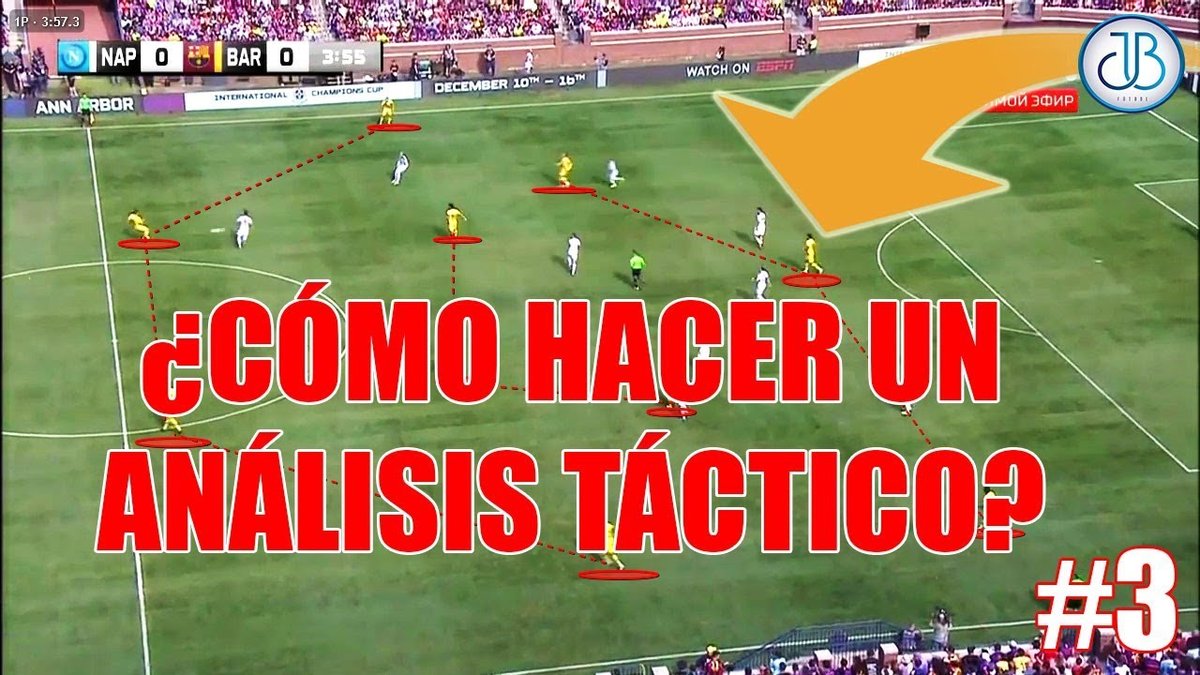
In football, the difference between a good team and a great one often boils down to strategy. You might have skilled players, but without a cohesive game plan rooted in Tactical Analysis and Formations, even world-class talent can struggle. This isn't just for the pros; understanding how tactics work can elevate any team, from Sunday league warriors to aspiring academy stars, allowing you to adapt elite strategies to your unique squad and dominate on the pitch.
Tactics are the blueprint of victory, organizing players to achieve specific objectives, while formations are the foundational shape of that blueprint. Together, they create a system where every player has a clear role, and the team moves as a unified force, maximizing strengths and exploiting opponent weaknesses.
At a Glance: Mastering Football Tactics
- Tactics & Formations are inseparable: Formations are the starting shape, tactics are the dynamic movements and roles within that shape.
- Elite Formations: The 4-3-3 (offensive press), 4-2-3-1 (balanced, creative), and 3-5-2 (defensive solidity, counter-attack) are key systems to understand. The classic 4-4-2 also offers defensive strength.
- Adapt, Don't Copy: Replicating pro strategies requires observing, analyzing, and then tailoring them to your team's specific player attributes (speed, technique, physique).
- Core Tactical Elements: Formation, pressing, transitions, movements off the ball, and possession are crucial for control and goal creation.
- Tactical Analysis: The systematic study of game strategies through observation, video, and data to understand team behavior and refine plans. It's distinct from individual performance analysis.
- Modern Edge: Video analysis, advanced platforms (like Catapult Pro Video), and biometric data are transforming how teams prepare and adapt.
The Blueprint of Victory: Understanding Tactics and Formations
At its heart, football is a game of space and time. Tactics and formations are the tools coaches use to control both. Think of a formation as your team's starting lineup diagram – the initial positions of your players on the pitch (e.g., four defenders, three midfielders, three forwards). But football is fluid, not static. Tactics are the dynamic rules that govern how those players move, interact, and react within that formation, both with and without the ball.
Every pass, every run, every tackle is part of a larger tactical framework designed to achieve specific goals: scoring, preventing goals, maintaining possession, or disrupting the opponent. When executed effectively, tactics empower a team to maximize its strengths, minimize its weaknesses, and ultimately compete against even stronger opposition.
The Foundation: Key Tactical Elements
Before diving into specific formations, it's essential to grasp the fundamental building blocks that comprise any tactical approach:
- Formation (Initial Positioning): This is where it all begins – the basic shape your team adopts on the field. It dictates the distribution of players and influences defensive solidity, midfield control, and attacking presence.
- Pressing (Coordinated Ball Recovery): More than just chasing the ball, pressing is a coordinated team effort to win possession back quickly, often high up the pitch, by closing down space and forcing errors.
- Transitions (Attack-Defense & Vice Versa): The rapid shifts between offensive and defensive phases of play. How quickly your team switches from defending to attacking after winning the ball, and vice versa, can be a game-changer.
- Movements (Off-the-Ball Runs): The intelligent déplacements (movements without the ball) that create space for teammates, drag defenders out of position, or provide passing options. This is where much of football's artistry lies.
- Possession (Controlling the Ball and Tempo): More than just holding onto the ball, possession involves using it effectively to control the game's rhythm, exhaust opponents, and create organized attacking opportunities.
These elements don't operate in isolation. They intertwine to form a coherent system, a complex dance where every player’s movement is choreographed to serve the team’s overarching strategy.
Popular Formations: Shapes of Success
Elite football primarily leverages a few core formations, each with its distinct philosophy and requirements. While these are starting points, remember that fluidity and adaptation are key.
The Dominant 4-3-3: Attacking Prowess and High Press
- Concept: Four defenders, three midfielders, three forwards. It's inherently offensive, aiming to dominate possession and pressure opponents high up the pitch.
- Strengths:
- Width: Fast wingers stretch defenses, creating one-on-one opportunities.
- Midfield Control: Three central midfielders can overwhelm opponents, facilitating intricate passing triangles and retaining possession.
- High Press: Ideal for teams that want to win the ball back quickly in dangerous areas, thanks to the forward line's aggressive positioning.
- Ideal for: Teams with technically gifted midfielders, rapid wingers, and forwards capable of leading the press.
- Considerations: Can be vulnerable to counter-attacks if the midfielders don't track back effectively, or if full-backs are caught too high up the pitch.
The Balanced 4-2-3-1: Stability Meets Creativity
- Concept: Four defenders, two defensive midfielders (pivots), three attacking midfielders (two wide, one central CAM), and one striker.
- Strengths:
- Defensive Solidity: The two defensive midfielders provide a strong shield in front of the backline, offering excellent protection.
- Creative Hub: The central attacking midfielder (CAM) acts as the team's playmaker, linking midfield and attack, threading through balls, and creating chances.
- Flexibility: Can easily transition from defense to attack, with wide players often tucking in or staying wide based on the phase of play.
- Ideal for: Teams seeking a blend of defensive stability and creative attacking flair, with a strong central playmaker.
- Considerations: Requires disciplined defensive midfielders and a striker who isn't isolated. The wide attacking midfielders need to contribute defensively.
The Resilient 3-5-2: Defensive Power and Counter-Attacking Threat
- Concept: Three central defenders, five midfielders (two wide wing-backs, three central), and two forwards.
- Strengths:
- Defensive Security: The three central defenders provide a robust defensive block, making it difficult for opponents to play through the middle.
- Wing-Back Overlaps: The wing-backs are crucial, providing width in attack while tracking back defensively, offering numerical superiority in both phases.
- Counter-Attack Threat: The two strikers can combine effectively, creating dangerous situations on the break, often exploiting space left by an overcommitted opponent.
- Ideal for: Teams prioritizing defensive solidity, those facing stronger opposition, or squads with athletic wing-backs who can cover significant ground.
- Considerations: Relies heavily on the stamina and tactical awareness of the wing-backs. Can lack natural width in attack if wing-backs don't push forward.
The Enduring 4-4-2: A Classic for Consistency
- Concept: Four defenders, four midfielders (two central, two wide), and two forwards.
- Strengths:
- Defensive Structure: Offers excellent defensive cover across the pitch, especially in midfield, making it hard to break down.
- Counter-Attacking Opportunities: The two strikers can link up well for quick breaks, and wide midfielders can provide service from the flanks.
- Simplicity: Often easier to teach and implement for teams with less tactical experience.
- Ideal for: Teams prioritizing defensive organization and a direct style of play, or those looking for a balanced approach.
- Considerations: Can sometimes struggle for central attacking creativity if the central midfielders are too defensively focused.
Remember, these are starting points. Formations like the 4-3-3, 4-2-3-1, and 3-5-2 can evolve into fluid systems based on player movement, providing a dynamic challenge for any opposition.
Adapting Elite Strategies for Your Team
Watching a World Cup match might inspire grand tactical visions, but how do you translate the brilliance of teams like Inter Milan vs AC Milan lineups into your local league? It’s not about direct copy-pasting; it’s about intelligent adaptation.
Here’s a practical guide to bridge that gap:
- Observe and Analyze the Pros:
- Focus on the "Why": Don't just see a high press; understand why they're pressing high (e.g., to force long balls from a weak goalkeeper).
- Player Positioning & Movement: Pay close attention to where players position themselves without the ball, how they move to create passing lanes, and how they react defensively.
- Pressing Triggers: What prompts a team to start pressing? Is it a pass to the full-back, a slow back-pass, or the opponent entering a specific zone?
- Attacking Patterns: Look for recurring passing combinations, overlaps, and underlaps that lead to scoring chances.
- Adapt to Your Team's Strengths and Weaknesses:
- Player Characteristics: Be honest about your players' attributes. Do you have lightning-fast wingers for a 4-3-3? Are your central midfielders technical enough to dominate possession, or are they better suited to winning duels in a 4-4-2? Do you have strong, intelligent center-backs for a 3-5-2?
- Physicality: Can your players maintain a high press for 90 minutes, or is a more compact, reactive defense (like in a 3-5-2) more sustainable?
- Technical Skill: If your team struggles with intricate passing, a direct counter-attacking approach might be more effective than a possession-based game.
- Squad Depth: Consider if you have versatile players who can fill multiple roles if injuries or suspensions occur.
- Practice in Training – Visually and Practically:
- Visual Aids: Use whiteboards, cones, and even simple tactical boards to visually explain positions, movements, and responsibilities. Show players where they should be.
- Small-Sided Games (SSGs): Design SSGs that emphasize specific tactical elements. For example, a 4v4 in a tight space to practice quick transitions, or a possession-based Rondo to improve ball retention.
- Repetition: Drill key movements and patterns until they become second nature. How should the midfield pivot drop when the center-backs split? When does a winger track back?
- Role Clarity: Ensure every player understands their individual role within the collective tactical framework.
- Apply in the Match – Start Simple, Be Flexible:
- Introduce Gradually: Don't try to implement five new tactics in one game. Start with one or two fundamental changes (e.g., a specific pressing trigger or a new defensive shape).
- Observe and Adjust: Watch how your opponent reacts. Are they exploiting a weakness in your new formation? Are your players struggling with a certain movement? Be prepared to make in-game adjustments.
- Communication: Encourage constant communication on the field. Players calling out positions ("Man on!", "Time!", "Cover!") are crucial for maintaining tactical shape.
- Tactics are Flexible: Remember, no tactic is set in stone. The best coaches are those who can adapt their strategies based on the flow of the game, the opposition, and their own players' performance.
Beyond the Eyeball Test: The Science of Tactical Analysis
While observation is vital, modern football leverages a deeper, data-driven approach: Tactical Analysis. This is the exhaustive study of a team's or player's strategies, behaviors, and patterns of play using observation, breakdown of game sequences, player statistics, and real-time data.
Tactical analysis provides a nuanced understanding of individual and collective behavior, strategic deployments, and game dynamics, revealing patterns that inform precise strategic adaptations. It’s about more than just who won; it’s about how they won and why.
Key areas of focus in tactical analysis include:
- Player Movements: How do players move off the ball to create space or close down opponents?
- Formation Effectiveness: How well does the chosen formation hold its shape in different phases of play?
- Ball Possession: Not just percentage, but where possession is held, how quickly it's circulated, and what it leads to.
- Transitions: The speed and effectiveness of switches from attack to defense and vice versa.
- Set-Piece Efficacy: Analyzing corners, free-kicks, and penalties for both offensive creation and defensive prevention.
Tactical Analysis vs. Performance Analysis: Knowing the Difference
It’s easy to confuse these two, but they serve distinct purposes:
- Tactical Analysis: Focuses on how a team executes its game plan. It evaluates team shape, response to opponent movements, strategic effectiveness, and collective behavior. Think of it as studying the team's brain.
- Performance Analysis: Concentrates on what individual players do physically and technically. This includes speed, distance covered, physiological data, successful passes, tackles won, and shots on target. It aims to optimize a player’s physical condition and individual actions. Think of it as studying a player's body and basic skills.
Both are invaluable, but tactical analysis provides the overarching framework for how a team operates as a unit.
Tools of the Trade: Modern Tactical Analysis
The landscape of tactical analysis has been revolutionized by technology. Gone are the days of just a notepad and a stopwatch. Today's coaches leverage sophisticated tools to dissect every aspect of the game.
Video Analysis: The Coach's Magnifying Glass
Video is the bedrock of modern tactical analysis. By recording and reviewing every moment of a match, coaches can study tactics, formations, and individual performances in minute detail.
- Detailed Review: Pause, rewind, slow-motion – video allows for repeated viewing of key sequences.
- Player Feedback: Visual evidence is powerful. Showing a player exactly where they went wrong or right is far more effective than just telling them.
- Opponent Scouting: Analyzing video of upcoming opponents reveals their preferred formations, attacking patterns, defensive weaknesses, and individual player tendencies.
Individual Player Analysis: Precision in Roles
Beyond collective tactics, detailed analysis of individual players is crucial. This involves evaluating their performance, skills, and attributes within the team's strategic framework.
- Technical Aspects: Passing accuracy, dribbling success, shooting prowess.
- Decision-Making: Choosing the right pass, when to press, positional awareness.
- Physical Condition: Distance covered, sprint speed, acceleration, fatigue levels (often measured with wearable tech).
- Psychological Factors: Composure under pressure, leadership, resilience.
Advanced data from tools like GPS trackers (distance, speed, heat maps) and physiological sensors allow coaches to adapt training, accelerate player development, and optimize roles to fit the tactical plan.
Advanced Platforms: Simulating and Refining Strategies
Modern tactical analysis platforms integrate vast amounts of data with video, providing powerful insights.
- Simulation: These tools can simulate various scenarios, allowing coaches to visualize how tactical changes (e.g., shifting from a 4-3-3 to a 3-5-2) would impact player movements, passing options, and defensive solidity before they hit the training pitch.
- Automated Workflows: Platforms like Catapult Pro Video and MatchTracker streamline the analysis process. They automate the synchronization of multi-angle video with stadium coordinates and wearable data, saving countless hours of manual work.
- Real-time Insights: Some systems offer live streaming and remote collaboration, allowing analysts to provide feedback during a game or from a different location.
- Interactive Presentations: Coaches can easily create compelling video presentations for players, highlighting key tactical points, opponent weaknesses, or individual responsibilities. This ensures everyone is on the same page.
Cutting-Edge Trends & Innovations in Football Tactics
The world of football tactics is constantly evolving, driven by innovation, data, and a relentless pursuit of competitive advantage.
- High-Pressing Tactics: This remains a dominant trend, with teams using sophisticated pressing schemes to win the ball back quickly and high up the pitch. Analysis platforms help identify the optimal "pressing triggers" – specific moments or opponent actions that should initiate the press.
- Fluid Offensive Roles: Many top teams now employ formations that are highly flexible, with players dynamically interchanging positions to destabilize defensive structures. Full-backs might invert, wingers might move centrally, or a striker might drop deep – all choreographed to confuse opponents.
- Integrated Advanced Analytics & Biometric Data: Beyond basic stats, teams are leveraging advanced metrics to assess player load, sprint speeds, and heat maps in real-time. This informs strategic adaptations, ensures optimal physical preparation, and helps prevent injuries.
- Set-Piece Specialists: The importance of set pieces (corners, free kicks, throw-ins, penalties) has led to specialized coaching roles. Data analysis is used to identify opponent defensive patterns and adapt offensive strategies for maximum impact. Every dead-ball situation becomes a carefully planned tactical play.
These innovations ensure that teams using platforms like Catapult Pro Video and MatchTracker stay at the tactical forefront of modern football, constantly refining their approach and seeking new ways to win.
Empowering Your Team with Tactical Intelligence
Whether you're coaching a local youth team or aiming for professional heights, a deep understanding of Tactical Analysis and Formations is non-negotiable. It's not just about drawing arrows on a whiteboard; it's about empowering your players with the knowledge and confidence to execute a game plan, adapt on the fly, and perform as a cohesive unit.
Start by truly understanding your players' strengths and weaknesses. Then, choose a formation that plays to those strengths. Gradually introduce tactical concepts in training, using video and visual aids to make them digestible. Encourage communication and critical thinking on the pitch.
Football is beautiful because it’s a constant puzzle. By embracing tactical intelligence, you're not just playing the game; you're mastering its intricate art, giving your team the edge it needs to outthink, outmaneuver, and outplay the competition. The journey to tactical mastery is ongoing, but with the right approach, it’s a journey that leads to more wins, greater understanding, and a deeper love for the beautiful game.